AUTOPOIESIS: A Song for Resuscitation

Arthshila Goa, India
Dec 2025—Mar 2026

AUTOPOIESIS: A Song for Resuscitation

AUTOPOIESIS: A Song for Resuscitation

Jahangir Jani, Sajan Mani, Saviya Lopes, Imaad Majeed, Jovita Alvares, and Priyageetha Dia
Curated by: Shaunak Mahbubani
at Arthshila Goa, 6 December 2025 – 1 March 2026

See the exhibition booklet

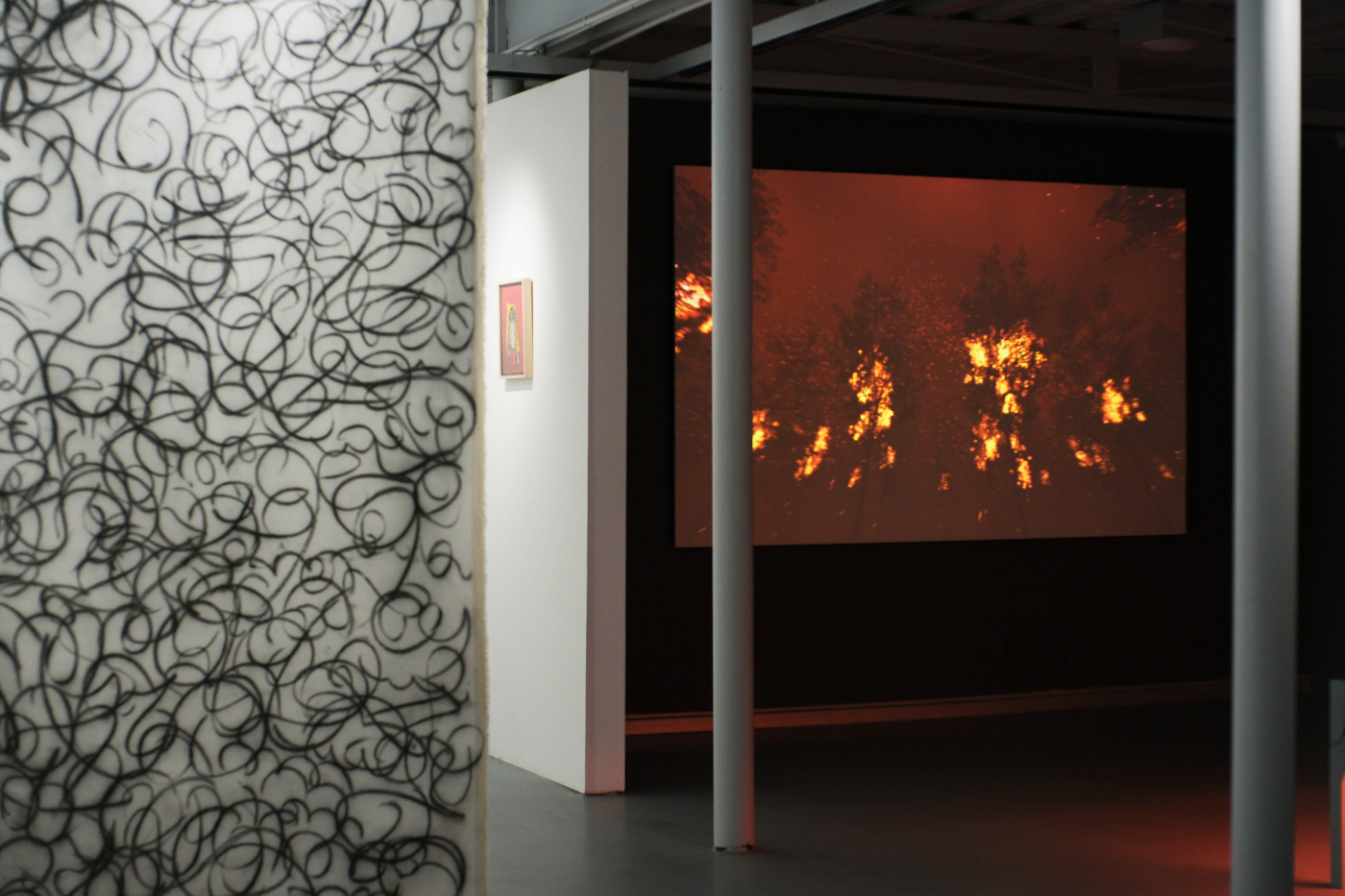
AUTOPOIESIS: A Song for Resuscitation brings together six artists from peninsular South Asia — from Karachi to Colombo — whose practices foreground lived experiences. The exhibition offers a glimpse into the pivotal auto-narrative movement transforming subcontinental art ecosystems. Curated by Shaunak Mahbubani, and presented by Arthshila Goa, the exhibition is on view from 6 December 2025 to 1 March 2026.

South Asian art has been undergoing a critical transformation: an unstoppable rise of artists reclaiming the right to tell their own stories. Refusing the violence of ethnographic representation, their practices draw from personal, ancestral, and communal histories. At the centre of this movement are communities that have historically been denied the ability to voice their perspectives on their own terms, revealing the depth and density that emerges when art is forged in the fire of direct experience.

Extending Jamaican-born cultural theorist Sylvia Wynter's proposition of the "autopoetic turn", research series AUTOPOIESIS examines how past and present auto-narrative artists have been challenging rampant tropes of exoticisation and simplification, creating works that portray themselves and their communities as full and complex beings. Although it is now reaching heightened visibility, this movement has been swelling over the last 40 years. In India, Bhupen Khakhar is one of its pioneering figures, an artist whose oeuvre was explored within a landmark show in Goa in 2024. His lineage extends to the genre-defying practice of Jahangir Jani, another pathmaking queer artist who gained early recognition in the 1990s for his bold depictions of male corporeality. Jani's current body of work veers towards spiritual abstraction, reminiscing on past amorous affairs in Mumbai through mixed-media collage and paintings. 

Taking Jani’s work as a touchstone to explore the healing power of poetic utterance,  the exhibition invites artists with peninsular entanglements, responding to Goa’s historical position along routes of cultural exchange: 

Jovita Alvarez, from Karachi, animates a sparse archive of Pakistani Christians with ancestral ties to Goa, retracing her grandmother’s migration through a two-channel video and illuminated photo sculptures.

Saviya Lopes investigates her grandfather’s journey from Bassein (now Vasai) to Freetown, Sierra Leone, reflecting on resonances with Creole comrades across the Indian Ocean world in a presentation of textiles, paintings, and archival objects. 

Sajan Mani’s layered inscriptions and expressive marked paintings, drawing references to the poetry of Kerala anti-caste revolutionary Poyankali Appachan and other ancestors, assert the necessity of access to language and learning in the fight for liberation.

Priyageetha Dia examines histories of caste labour through her family’s migration as indentured workers to the Malay peninsula; her immersive CGI video centres oppari, a Tamil Dalit lamentation practice that embodies remembrance and resistance.

Imaad Majeed, from Sri Lanka, documents kummi adi, a form of Tamil music once performed by Muslim women at harvests and weddings, later suppressed by religious reformism – through an evocative sonicscape. For the opening of the exhibition, Imaad will perform a live set from their sonic archives.

Curator Shaunak Mahbubani, based between Berlin and India, notes, “It feels extremely meaningful to invite continued conversations with such fantastic auto-narrative artists into a series focused on this movement in South Asia. They are not just creatives, they are healers, resuscitating our wounded archives. While foregrounding the aesthetic nuances and social impact of this mode of making, it is crucial to also introspect on the infrastructures of our arts ecosystem, asking ourselves whose stories are we listening to and whose voices are making their way to museum shows and private collections?”

Read the exhibition essay